Advocacy
The sole organization dedicated to representing the interests of farm labor contractors and advocating for you.
Decisions made in Sacramento and Washington D.C. directly affect your business, your employees, and the future of agriculture in California. CFLCA works to amplify the voice, concerns, and interests of farm labor contractors by engaging with industry partners; state & federal policy makers; academic & research institutions; state & federal regulatory agencies; and news & media outlets.
The CFLCA Advocacy Committee is grateful for the collaboration of our partners, and of course the support of our Members and PAC Donors. Political engagement is how individual concerns become collective solutions. Together, voices become power.
How do we engage in the political arena?
- Provide a unified voice for California FLCs
- Engage with policy makers to share industry perspectives and expertise
- Coalition building to strengthen the voice for California ag
- Monitor and report on relevant legislation to our Members
- Provide testimony and feedback on proposed policies and regulations
- Address challenging policies and regulations
- Outreach to build a stronger positive reputation for the ag labor industry
- Support ethical law-abiding employers and combat bad actors
Recent CFLCA Advocacy Efforts
Did you want overly broad language added to FLC licensing requirements slowing down annual renewals even more? How about a default judgement in favor of the employee if an employer failed to respond to a notice within just 10 days after it is mailed? If neither sounds appealing, thank the CFLCA Advocacy Committee which worked to remove these provisions from Assembly Bill 2227.
With the support of a coalition of ag groups we're still pushing for additional amendments on AB 2227 to maintain FLC bonds tied to payroll rather than gross receipts. CFLCA is fighting for you, and our voice strengthens as our membership grows. Help us advocate for you by becoming a CFLCA Member! Already a member? Reach out to Kimberly to learn how to engage and lend your voice.
|

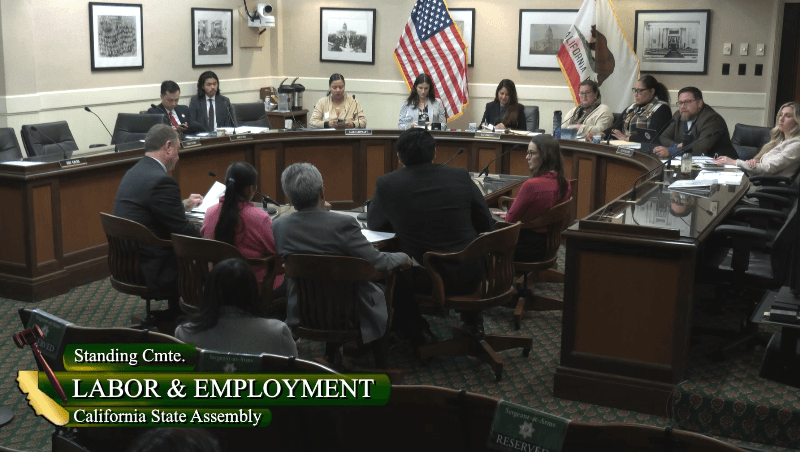
With the support of a coalition of ag organizations, Kimberly testified to the Assembly Labor & Employment Committee in opposition to AB 2227 (video below). She brought attention to issues in the bill, including misunderstandings of FLCs & the wage claims process, administrative burdens, and insufficient enforcement against bad actors to protect farmworkers and ethical law abiding employers. The bill remains active and CFLCA will continue working to address concerns, including language seeking a default judgement in favor of the employee if an employer fails to respond to a notice within 10 days after it is mailed.
- Opposed AB 2646 ($19.75 Ag minimum wage) - sent to the Assembly Appropriations Committee
- Supported SB 921 (Ag overtime tax credit) - voted down in committee
- Opposed AB 2227 (changes to FLC bonds, licensing process, & default judgements) - sent to the Assembly Appropriations Committee
CFLCA joined over 100 agricultural organizations from across the U.S. led by the National Council of Ag Employers (NCAE), calling attention to H-2A program challenges stemming from regulatory complexities. The State Department's expanded screening of applicants with driving-related duties created severe processing backlogs at consulates.
The letter proposes expanding visa interview waivers for workers who have already been vetted, have previously worked in the U.S., and who have a clean record. This would significantly reduce pressure on consulates while fully upholding national security standards and ensuring farmers have access to their critical workforce in a timely manner.
Building upon the California Advocacy Day last month, CFLCA’s Advocacy Committee has been tracking and engaging on key bills, from the nearly 1,800 introduced in the state legislature this session.
Efforts to Undermine the 2024 PAGA reforms
• Opposing SB 310 (coalition letter) & thank you to CFLCA members for calling on key legislators which helped defeat the bill.
• Joining the coalition letter commenting on the Labor and Workforce Development Agency’s proposed regulatory action.
Opposing AB 2646 which seeks a $19.75 Ag Minimum Wage. CFLCA signed onto the coalition letter and is working with coalition partners to educate legislators on issues the bill presents.
Calling for solutions for the Subsequent Injuries Benefit Trust Fund; signing onto the coalition letter opposing AB 1576 & the coalition letter supporting the proposed budget trailer bill language addressing the looming fiscal crisis for California’s SIBTF.
Engaging with the sponsors & author of AB 2227 which seeks to base FLC surety bond rates on gross receipts rather than payroll and increase the bond amounts.
Educating legislators on the impacts of the ag overtime law and how SB 921's proposed Ag Overtime Tax Credit could help offset the negative impacts for farmers and workers.
Other bills of interest include:
SB 951 -Technological displacement notices
SB 1054 - Unemployment insurance reporting for public benefit eligibility
AB 1803 - Anti-hate speech training
AB 1940 - Unlawful discrimination: menopause
AB 1961 - Workplace violence protective orders
AB 2082 - Rural Farmworker Women’s Health
Those impacted to the greatest extent—farmworkers whose weekly hours were reduced from 60 to 40—have effectively lost more than $300 a week. Hill said there are drawbacks to working 10-hour days, especially in a physically demanding profession. But in her research, she found farmworkers “reported very strong preferences for higher incomes in exchange for longer hours.” Kimberly Clark, executive director of the California Farm Labor Contractor Association, said that when the overtime law took effect, labor contractors reported a surge in requests from farmworkers seeking referrals for second jobs.
Dr. Hill estimated the tax credit could cost California $336 million to $679 million per year. She added that all the money would go into employee paychecks. If used, it could amount to as much as a 75% increase in earnings for individual workers and send hundreds of millions of dollars to some of California’s lowest-income residents. “It would be hugely beneficial for farmworkers who want those extra hours and want to earn more money,” Hill said. Read the full story from Ag Alert.
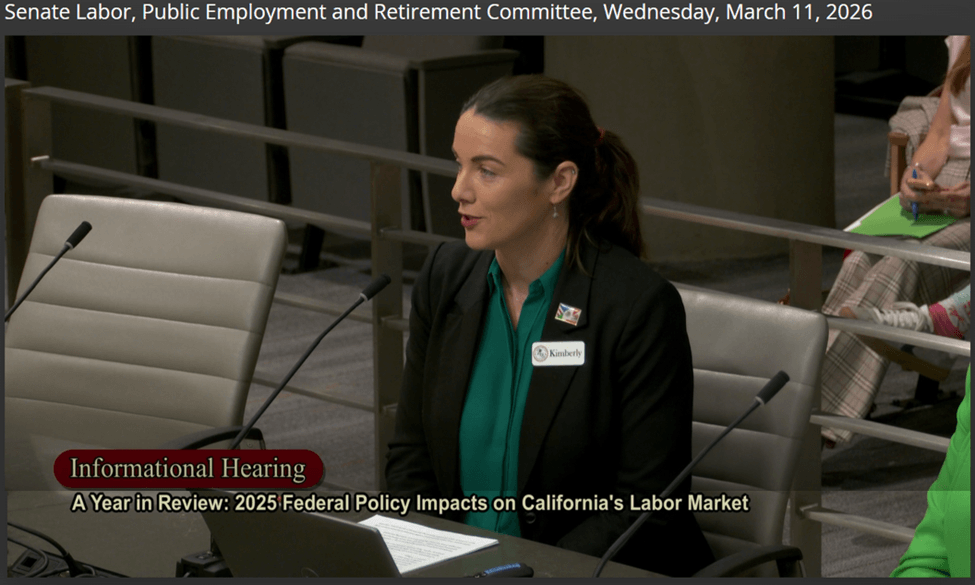
Kimberly presented to the Senate Labor, Public Employment and Retirement Committee alongside Rachel Michelin (California Retailers Association) and Louie Brown (Representing California Grocers Association). She spoke on converging challenges including immigration enforcement, trade disruptions, and shifting markets (as seen in the video below). Kimberly urged the state to partner more effectively with employers, streamline regulations, and reduce administrative burdens to help businesses weather external pressures, invest in their workforce, and protect California jobs and agriculture.
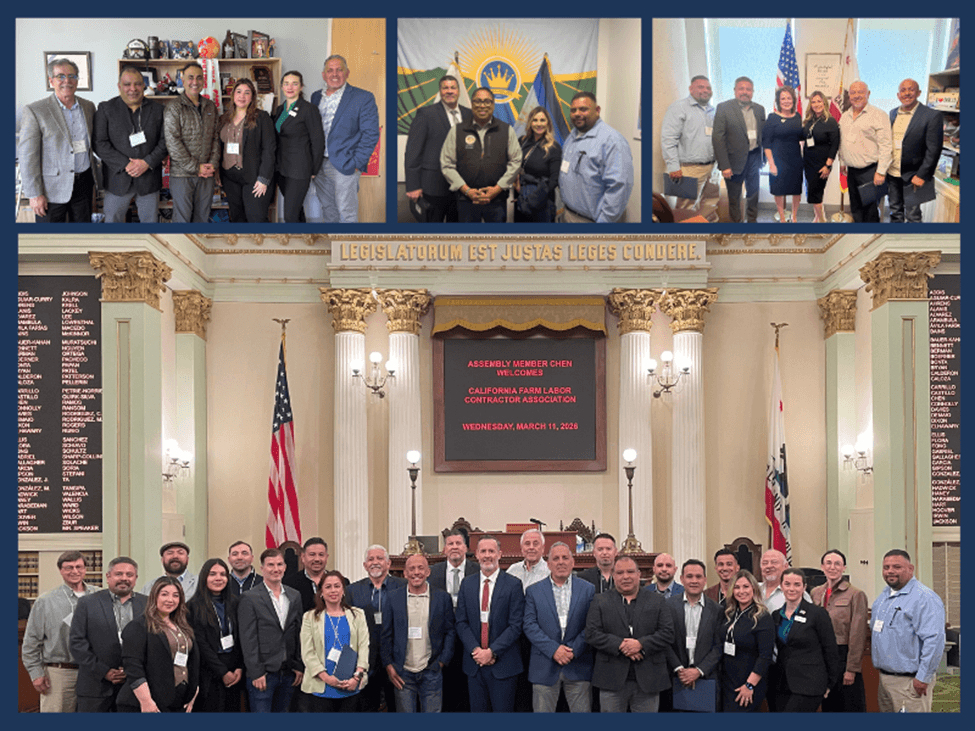
In March CFLCA Members came to Sacramento to meet with 26 California legislators, driving the conversation where it matters most. We educated policy makers on the critical role of FLCs, shared real-world realities, and advocated for practical, balanced policies to support a strong, sustainable food system.
The relationships forged, conversations started, and awareness raised planted seeds to grow into lasting influence. This is only the beginning, and with each passing year, our collective voice will grow stronger.
Political engagement is how individual concerns become collective solutions. Thank you to everyone who participated and helped make Advocacy Day a powerful moment for our industry.
We were pleased to share in February 2026 that SB 310 will not be moving through the legislative process this year. The bill sought to create a new private right of action for Labor Code violations, handing plaintiff attorneys new mechanisms to collect penalties from employers. SB 310 would also have seriously eroded the 2024 PAGA reforms by allowing private attorneys to bypass LWDA oversight and penalty caps.
CFLCA would like to thank our members who reached out to key State Senators, as well as CalChamber for their leadership and the other business groups that collaborated to prevent the bill moving forward last week.
Interviews would be brief and centered around your concerns about heat and farm labor, what strategies you have implemented, successes and challenges with those strategies, and other resources that might be helpful for you. Participants will receive a $75 gift card and responses will be completely confidential.
CFLCA encourages your participation to ensure that diverse employer perspectives are included in research into workplace safety issues. If you would like to help strengthen the voice of employers and the ag labor industry or have questions about participating, please reach out to us today!
18 months into "New PAGA" law firms are reporting faster settlements, lower penalty exposure, and a surge in proactive compliance from employers to fix issues before they become claims. Read the PAGA Reform Successes report here and review key early successes:
- Employers Doubling Down on Compliance Efforts - Employers who can demonstrate efforts to comply with the law (audits, training, etc.) can benefit from a penalty cap.
- Narrower Standing Reduces Frivolous Lawsuits - Lawsuits are now limited to actual violations experienced by the plaintiff.
- Reduced Penalties for Employers - Caps for good faith compliance, reduced penalties for wage statement and isolated violations.
- One-Year Limitation Period - Plaintiffs must have experienced the violation within the past year to bring a claim.
- Ability to Limit the Scope of Claims and Evidence to Ensure Manageability - Courts can limit the scope of a PAGA claim to ensure cases remain manageable for trial.
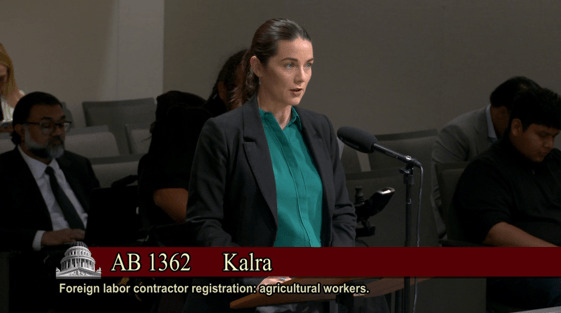
CFLCA's Advocacy Committee tracked several bills of interest in the 24-25 session, providing feedback and signing onto coalition letters on bills addressing PAGA, workplace surveillance, ultra processed foods, the Subsequent Injury Benefit Trust Fund, and letters to the Cal/OSHA Standards Board regarding wildfire smoke, heat, and workplace violence regulations. Last week CFLCA joined coalition partners, calling on the Governor to veto two bills:
- AB 1362 Foreign Labor Contractor Registration Coalition Veto Request Letter
- AB 1136 Employment: immigration and work authorization Coalition Veto Request Letter
|
|

CFLC Political Action Committee (PAC)
The California Farm Labor Contractor Political Action Committee supports candidates seeking public office on the state and federal levels that favor the causes of FLCs and the constituency that we serve. By contributing to our PAC, you will be working to promote the voice of our industry.
Please consider making a donation in whatever amount most appropriate for you and your budget. Our PAC's top priorities include:
- Increase PAC funds to enhance FLC voice in future election campaigns
- Identify state legislative proposals of impact to agricultural labor management
- Identify state legislators supportive of agribusiness community and issues
- Identify and support potential candidates to support in elections
The CA FLC PAC is managed by a sub-committee of the CFLCA Board of Directors. Committee members consider a wide range of issues and candidates. If you are a CFLCA member and would like to join the CA FLC PAC Committee, please contact Kimberly. CA Farm Labor Contractor EIN# 85-5352307